
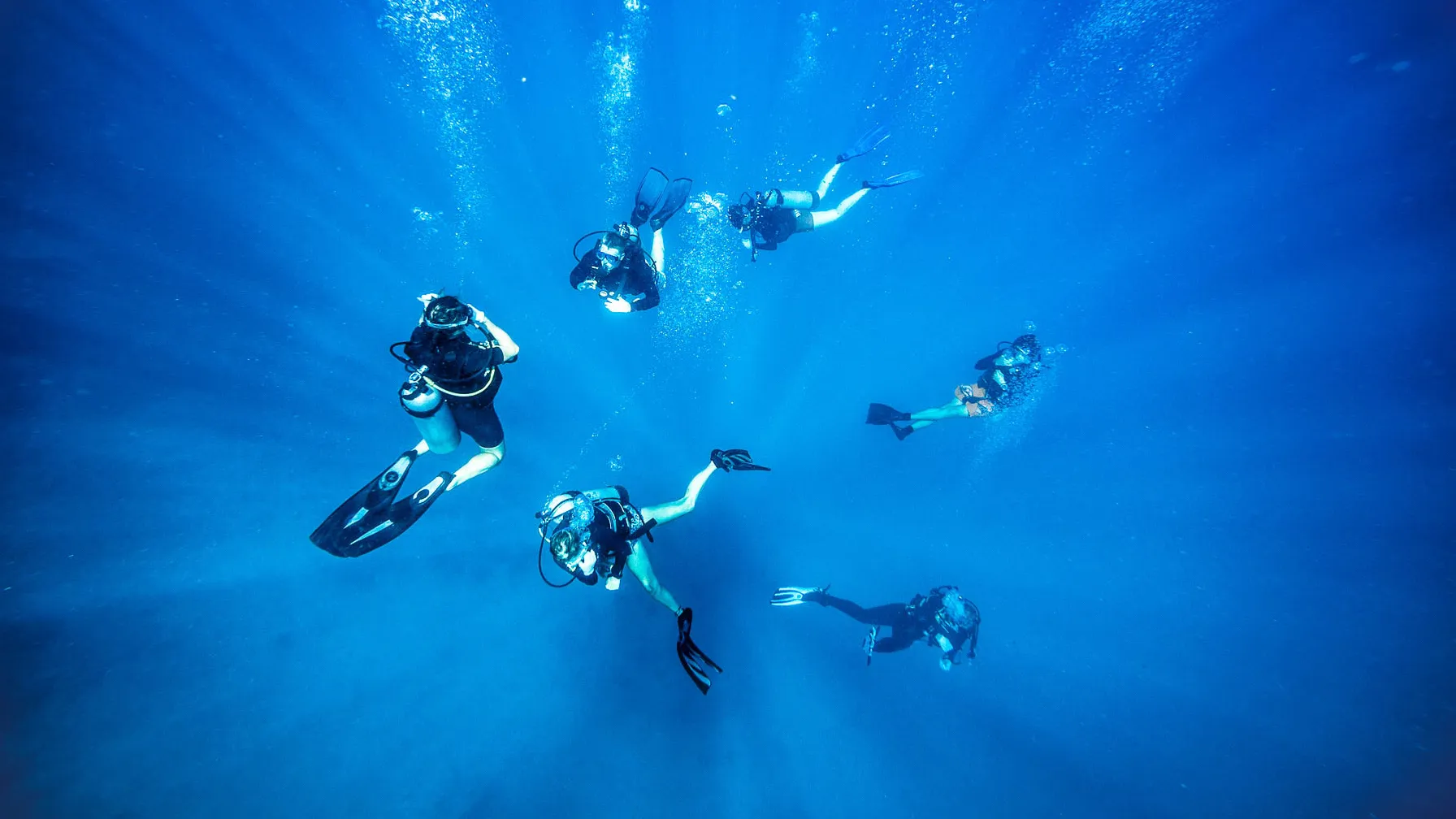
Greece is one of the most exciting and diverse scuba diving destinations in the Mediterranean. With crystal-clear waters, dramatic volcanic formations, colorful reefs, and hundreds of islands to explore, it offers unforgettable experiences for beginners, certified divers, and advanced enthusiasts. This complete guide covers everything you need to know — from the best dive sites and marine life to conditions, snorkeling spots, and what to expect on your first dive. Explore all our scuba diving services to find the perfect experience for your level.
Most dive sites in Greece offer visibility between 20–30 meters, making it ideal for underwater photography and relaxed exploration.
From late spring to early autumn, water temperatures range from 20°C to 28°C, creating comfortable conditions for all levels.
Especially around Santorini, the underwater landscape features lava formations, dramatic walls, and caldera structures found nowhere else in Europe.
Calm seas, gentle currents, and shallow dive sites make Greece perfect for first-time divers and families.
Santorini is famous for its caldera walls, volcanic rock formations, and crystal-clear waters. Ideal for both beginners and certified divers. Discover more in our full guide to scuba diving in Santorini.
Crete offers a mix of caverns, reefs, and historic wrecks, making it a top destination for adventurous divers.
Known for its loggerhead turtles and stunning blue caves, Zakynthos is perfect for relaxed dives and snorkeling.
Rhodes features warm temperatures, colorful reefs, and excellent visibility throughout the season.
Mykonos is home to impressive wrecks and deep routes ideal for advanced divers.
Visibility is consistently high, and currents are generally mild, making most dive sites accessible to all levels.
Expect to see octopus, groupers, moray eels, nudibranchs, sea bream, barracuda, and — in some areas — turtles and rays.
If you’re new to scuba diving, Greece is one of the best places to start.
Your instructor will guide you through equipment basics, breathing techniques, and underwater communication before taking you on a shallow, relaxed dive. Read our full beginner guide: What to Expect on Your First Dive.
You’ll learn how to equalize, clear your mask, and stay neutrally buoyant — all in a calm, controlled environment.
Greece offers many beginner-friendly sites with sandy bottoms, gentle slopes, and excellent visibility. See all activities for non-divers and first-time experiences.
Explore deeper walls, volcanic structures, and more challenging routes designed for experienced divers.
From ancient shipwrecks to modern vessels, Greece offers a variety of wreck dives suitable for different certification levels. Check out our guided dives for certified divers.
Night dives, navigation dives, and buoyancy workshops are available for divers looking to expand their skills.
Shallow reefs, volcanic coastlines, and calm bays make Greece ideal for snorkeling. Read our guide to the best snorkeling spots in Greece.
Warm waters and gentle waves allow non-divers to enjoy the marine world safely.
Expect to see colorful fish, sea stars, sponges, and occasionally turtles. Explore all snorkeling tours.
The caldera offers dramatic drop-offs and unique geological formations.
Swim through underwater lava structures shaped by ancient eruptions.
Learn more in our full guide to volcano diving in Santorini.
High season offers the best conditions, while low season provides quieter dive sites.
Visibility peaks in summer and early autumn.
Most dive centers provide high-quality equipment, making it easy to travel light.
Professional instructors, modern equipment, and strict safety protocols ensure a safe and enjoyable experience. See all diving packages for complete equipment details.
Yes — Greece offers calm conditions and shallow sites ideal for first-time divers.
Basic swimming ability is recommended, but you don’t need to be an expert.
Expect colorful fish, octopus, groupers, and occasionally turtles.
Most dives last 30–45 minutes depending on depth and air consumption.
Yes — children aged 10+ can participate in beginner programs.
